
Law enforcement agencies around the nation are grappling with how to incorporate artificial intelligence into their public safety strategy.
“We fell behind the curve,” Mark Kling, police chief for Rialto, California, told the city council last November. Kling was there to recommend a suite of new AI-powered law enforcement technologies for the fast-growing city east of Los Angeles.
The package included body camera software capable of translating more than 50 languages in real time, AI-written police reports, surveillance cameras supercharged with AI search capabilities, and drones programmed to assist first responders. The $14.3 million, nine-year contract passed unanimously.
Not everyone in law enforcement shares the enthusiasm. In Pima County, Arizona, home to Tucson, the sheriff’s deputy union helped shoot down a proposed $45 million, 10-year AI contract partly over concerns that it would eat up the budget needed to hire and retain officers.
“If you ask most civilians if they'd have their tax money paying for AI or have more cops on the street, I can hazard a guess at what they’d tell you,” said Sgt. Aaron Cross, the union president.
Both Rialto and Pima County explored contracts with Axon, which dominates the U.S. body camera market but has repositioned itself as a leader in police software. Its market dominance has led to failed antitrust challenges, and leadership is now leveraging contracts with 17,000 law enforcement agencies to spin up what they’ve dubbed the “AI Era” plan.
The CEO is bullish about the future of AI in police work. Rick Smith explained to investors last summer that budget-strapped police departments may not be able to hire more officers or may be struggling to recruit. Understaffed departments, he added, had told Axon they were shifting their budgets from hiring more officers to investing in technology.
“I'd say there's probably at least 50% of the workload of a police department that's automatable,” Smith told investors. “We're seeing that they're open to thinking about their budgets that way.”
“I think it’s absurd,” Cross, the Pima County sergeant, said when asked about that claim.
Some researchers are also skeptical. Ian Adams, a criminology professor at the University of South Carolina, looked at Axon’s Draft One, which uses audio from body cameras to write police reports, generated with the help of OpenAI tech. Axon advertises the tool with a testimonial from the Fort Collins, Colorado, police department, which said Draft One cut report-writing time by 82%.
Adams, a former officer familiar with the pains of report writing, hypothesized that AI would produce time savings. But he also suspected the testimonial’s number was “flimsy,” he said, because it came from officers' self-reports of time savings.
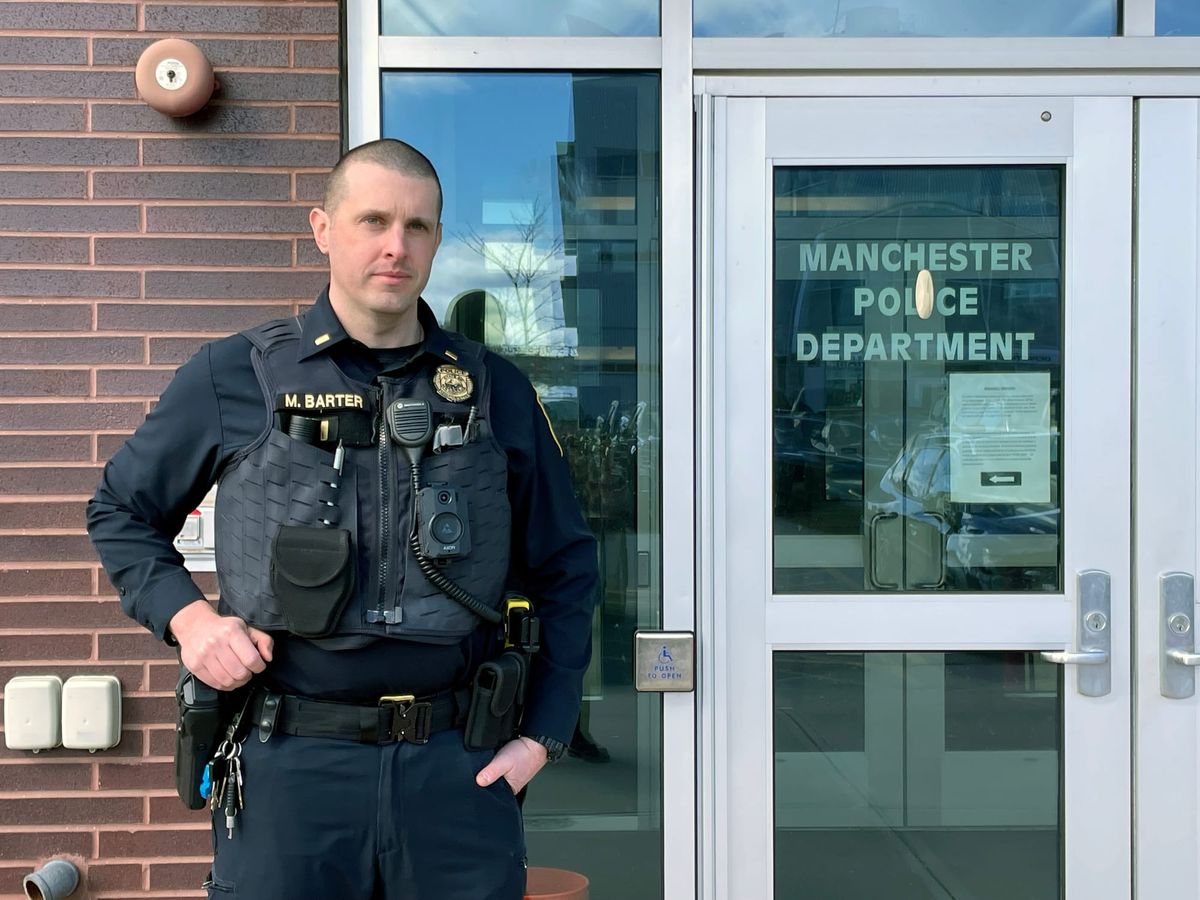
To study how much time Draft One saved, Adams partnered with Lt. Matthew Barter, a self-described “cop nerd” with the Manchester Police Department in New Hampshire.
The clarity of the results, published in the Journal of Experimental Criminology in October 2024, surprised them both: There was no meaningful time savings in the group of officers that switched to AI. Barter believes this was likely because officers spent time verifying and correcting AI-generated reports and were still saddled with data entry that the AI cannot handle.
Even though no time was saved, the researchers found a strong perception among officers that Draft One made them more efficient.
“It's a lot less thinking to do, and so that cognitive load is reduced,” Barter said. “I think that feels like time savings when you're not working all those muscles in the brain.”
An analysis during a Draft One trial period in the Anchorage Police Department in 2024 came to similar conclusions.
When asked about the discrepancy between independent research and Axon’s claims, spokesperson Rasleen Krupp said that Axon’s figures come from the experiences of many agencies and that Draft One had saved officers 2.2 million minutes in its first year across 100,000 incident reports.
AI is still a relatively small part of Axon’s business. The company reported that in 2025 it had $750 million in bookings for what it calls its “AI Era” plan, accounting for about 10% of total bookings.
In Kennewick, Washington, Jason Kiel, an assistant chief of police, said Axon broadened its AI offerings just as the department’s contract for body cameras and Tasers was expiring. Kennewick police leadership liked their Axon hardware, and a new contract would have cost about the same amount with or without AI, Kiel said.
But the department has yet to turn on its new AI features, Kiel said. First, there are big policy questions to answer: Should AI report writing or translations be used in an arrest, or only less serious situations, like reporting a theft? When is sending a drone the right course?
Kiel said the department developed a framework for tackling these emerging issues, centered on what can be responsibly outsourced to tech and how to keep humans in the loop.
“The bottom line is, people call and they're expecting a police officer to show up,” said Kiel.