
Rebecca Plevin reported for Proof News and Jayati Ramakrishnan reported for The Seattle Times.
The city of Seattle in late 2024 hired the online mental health platform Talkspace to provide free therapy to young people recovering from pandemic isolation and reeling from gun violence on school campuses.
Talkspace offered the alluring possibility of access: Boasting more than 6,000 licensed clinicians in its national network, it had the capacity to serve 55,000 Seattle youth ages 13 to 24, according to the city’s contract with the company. Young people could rapidly match with a therapist and start receiving services – unlimited messaging and one live, 30-minute virtual therapy visit each month.
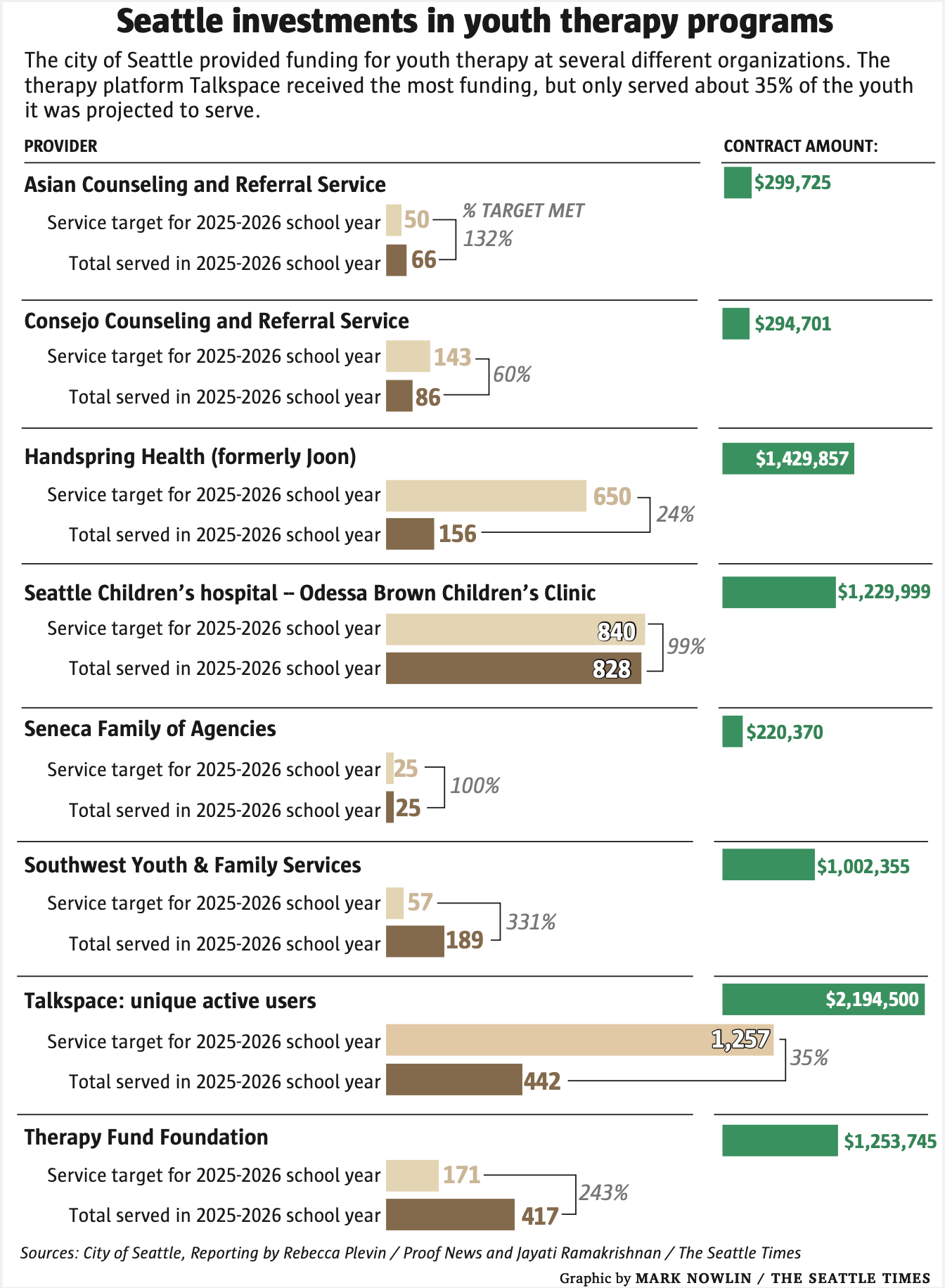
That promise has fallen short, an investigation by Proof News and The Seattle Times found. The agreement with Talkspace – worth more than $2 million over 21 months – assumed that 2,200 to 4,400 individuals would register for therapy services. But city data from the most recent school year shows only 442 young people matched with a provider and received therapy.
Talkspace was among eight providers Seattle contracted with to provide telehealth and in-person services as part of an ambitious youth mental health initiative. City invoices show Talkspace billed the city a monthly fee of $104,500, no matter how many young people used the service.
Despite being paid more than any other provider, Talkspace was the second furthest from its service target during the last school year, city data shows. Two local providers specializing in culturally competent mental health services were paid hundreds of thousands of dollars less than Talkspace, yet one served more clients, city data shows, and another served nearly as many.
Talkspace spokesperson Alana Morales said its teen initiatives are intended to make mental health care more accessible, with services designed around “how teens actually want to communicate,” including messaging their therapist from anywhere at any time. She did not respond to questions about taxpayers being on the hook for unused services.
In an interview with Proof News and The Seattle Times, the city’s education department director Dr. Dwane Chappelle defended the deal with Talkspace, saying it was one of myriad mental health investments.
Success, “isn’t measured by how many young people use the service,” Chappelle said. “It’s really about how many young people know they’re not alone.”
Washington state ranks in the bottom half nationwide for mental health access and outcomes, according to the nonprofit group Mental Health America. In Seattle, concerns about youth mental health reached a boiling point during the pandemic: In 2021, a district survey found that 37% of 10th-graders said they had felt sad or hopeless for more than two weeks and had stopped doing normal activities. Nearly 20% said that in the past year they had seriously considered attempting suicide.
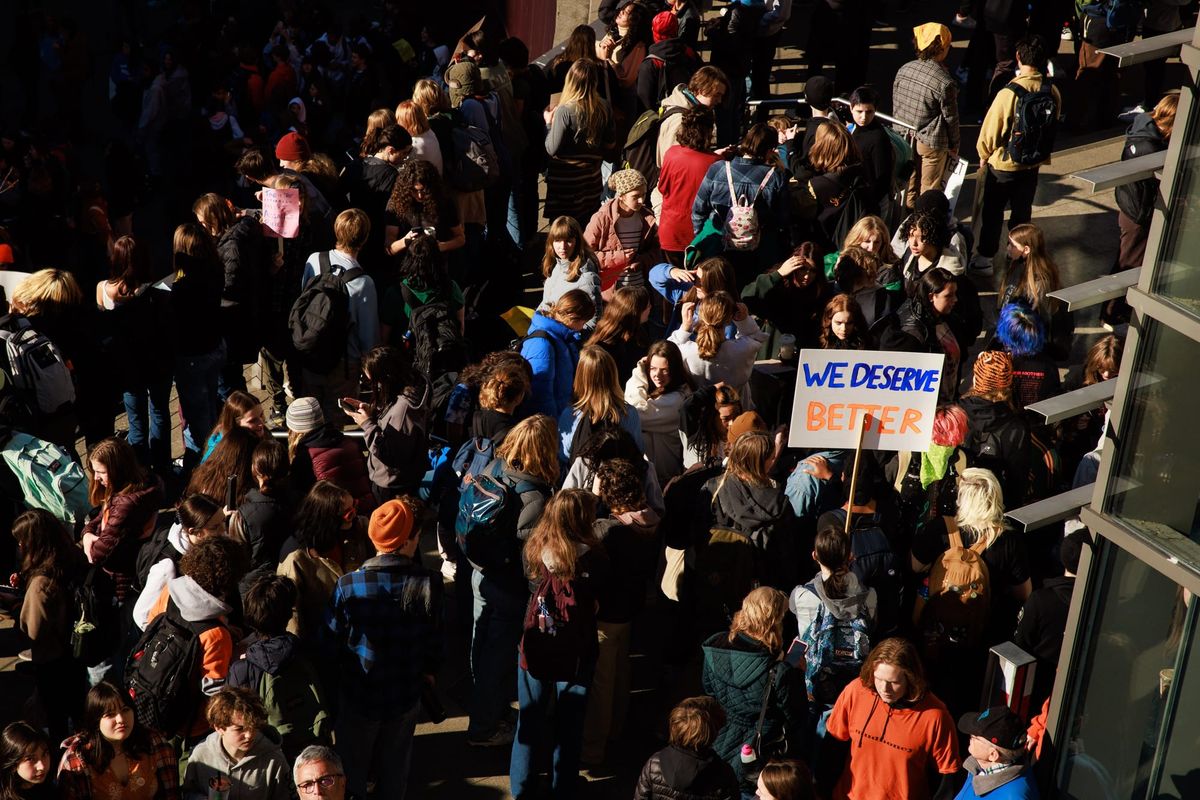
After a student was killed at Ingraham High School in 2022, Seattle students banded together to call for better mental health care.
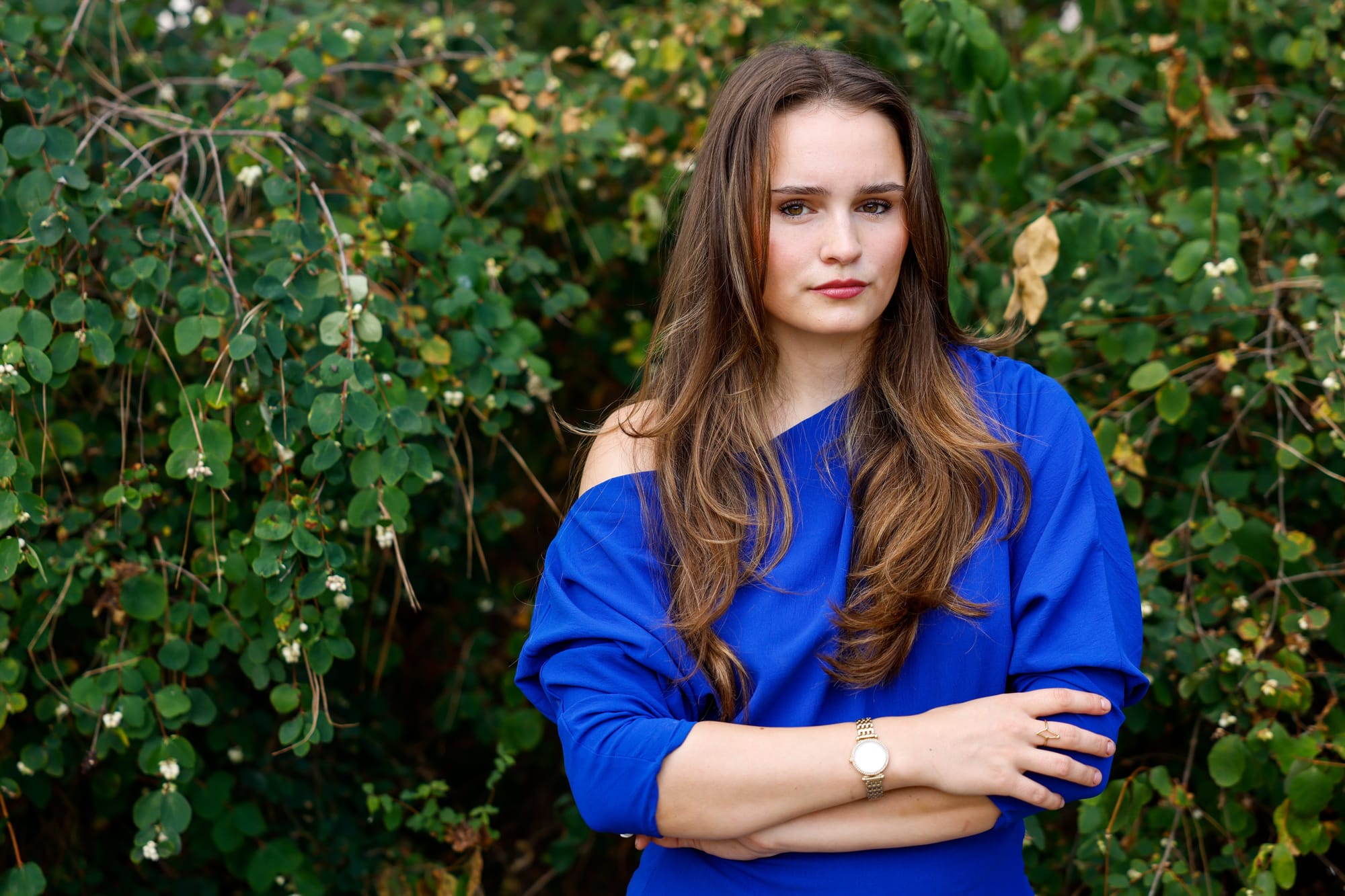
“Students need someone that they can go to any day, in person,” said Natalya McConnell, now 21, who advocated for the Seattle City Council to spend $20 million to hire more mental health counselors on school campuses. “Talkspace is not what students want.”
Councilmember Maritza Rivera chairs a committee that oversees city investments in educational equity, including the youth mental health initiative and the Talkspace contract. She did not comment on whether Talkspace proved to be a good use of taxpayer money, citing a lack of access to data that informed the city’s negotiations with Talkspace. Rivera said in an email that "we need to ensure that it is being utilized." No other council member provided responses to questions about the program.
At least one Seattle high school graduate who tried Talkspace privately, rather than through the city’s partnership, said she quit using the service after just a handful of virtual visits.
“We just talked about ‘Game of Thrones’ for an hour,” Annika Berry recalled of one Talkspace session, “and we never talked about any of my problems.”
“It feels like a waste of money, it feels like a waste of my time,” said Berry, now a 20-year-old student at Western Washington University in Bellingham, “and I also just wanted to talk to someone in person.”
In response to concerns about quality, Dr. Nikole Benders-Hadi, the company’s chief medical officer, said in a statement to Proof News and The Seattle Times, “We believe every patient deserves high-quality, clinically appropriate care and should feel that their time with a therapist is valuable.”
Mental Healthcare 'Veneer'
Talkspace launched in 2012, promising to make therapy accessible to the masses by supplanting the usual 50-minute, in-person session with asynchronous texting with a provider. The company started by attracting users through ads on podcasts and social media, but then swept up millions of customers through partnerships with insurance providers like UnitedHealth Group and Cigna.
Then, the company expanded into schools and city youth programs. Former Mayor Eric Adams made a three-year, $26 million deal between Talkspace and New York City in 2023; agreements with Baltimore County Public Schools and then Seattle followed.
Talkspace CEO Dr. Jon Cohen, in investor calls, has touted the company's ability to provide young people “with access to quality care through a platform that meets them where they are.” In late 2025, he told investors the youth initiatives were examples of “strong measurable impact on scale.”
Proof News and The Seattle Times reviewed Talkspace user data supplied to programs around the country and found the company’s reach has been limited.
- In Maryland, just over 1,100 of the 32,000 Baltimore County Public School students eligible for Talkspace services enrolled in therapy during the two and a half years of the program. School district spokesperson Gboyinde Onijala said in a statement that the partnership “continues to demonstrate strong outcomes” by rapidly matching students with providers.
- In North Carolina, which enlisted Talkspace to provide mental health care to up to 20,000 teenagers impacted by the justice system, 306 individuals signed up in the first year of the program. Sean Doyle, spokesperson for the North Carolina Department of Health and Human Services, emphasized that participation has increased in recent months, “demonstrating steady use of live and asynchronous support.”
- In New York City, more than 52,000 of 400,000 eligible young people registered for “TeenSpace,” with those teens engaging in more than 86,000 sessions. That works out to an average of less than two sessions per registered user, mostly through messaging. Rachel Vick, city health department spokesperson, said the department is undertaking an independent evaluation to examine registration and engagement. She didn’t respond to questions about whether the platform was sufficiently used.
All of these programs provided Proof News and The Seattle Times with the number of young people who registered for Talkspace, but not the number who actually received services. Seattle data showed that far fewer registrants go on to receive therapy. Of the 1,762 Seattle youth who registered last school year, just one-quarter went on to connect with a therapist, and that could be limited to a single text, city records show.
Mental health professionals said struggling students are best served in person by locals they can trust. Jennifer Kennett, the chair of the Washington Mental Health Counselors Association’s policy and professional advocacy committee, said she is “deeply disappointed” that Seattle contracted with a for-profit tech company pitching asynchronous messaging and one virtual session per month, saying: “It’s just not therapy.”
“I think this is a really good marketing campaign that has not fulfilled its promise,” she said. “This gives them the ability to say, ‘Look, we’ve got mental health services across the city.’ But they don’t. What they have is a veneer.”
Marissa Rousselle, spokesperson for the city’s education department, defended the messaging model, saying that for some youths, it’s “an easier entry point to care and in better alignment with their schedules and availability.”
The teen initiative has also expanded to New Jersey, where the state chapter of the American Academy of Pediatrics is collaborating with Talkspace to provide access to virtual therapy for teens ages 13 to 17 living in rural counties, according to Instagram posts shared this summer. Felicia Taylor, the chapter’s chief executive officer, declined to comment.
Some privacy experts also voice concerns about Talkspace’s data practices. Unlike traditional in-person therapy, each session is recorded and stored. The company used “hundreds of millions of anonymized therapy transcripts” to train its AI therapy companion chatbot, reports to investors reveal, but company spokesperson Morales said it excludes the therapy sessions from teen initiatives.
Talkspace also developed a suicide risk algorithm to monitor chats. Responding to questions about whether the company has used teen data in the development of that tool, Morales said: “We used our knowledge of teen therapy situations and typical scenarios, along with our clinical guidance, to refine the suicide risk algorithm to optimize for the teen population – but did not use specific teen data to train it.”
Rousselle said the city worked with Talkspace to “strengthen privacy protocols.” Jonah Spangenthal-Lee, who until recently served as a spokesperson for Seattle Mayor Katie Wilson, said the city will “scrutinize the service’s privacy and data practices and ensure that Seattle youth are protected.”
Doyle, the North Carolina spokesperson, said in a statement that the contract with Talkspace requires the company to comply with data privacy laws, adding: “We have no information on any practices within the North Carolina program that would compromise participant privacy.”
Vick, the New York spokesperson, reiterated that the city’s contract prohibits Talkspace from using teen data to develop or train AI. Baltimore County’s contract with the company explicitly allows for anonymized data to be used for product development, which school district spokesperson Onijala noted is permitted under the federal law created to protect patient privacy.
Talkspace’s teen privacy policy allows for therapy transcripts to improve services, and the adult policy states that transcripts can be used to develop new products.
Washington state Rep. Lisa Callan, D-Issaquah, said new programs like Seattle’s partnership with Talkspace can take time to grow, but raised concerns about tech companies using people’s data to create products. People should be able to decide how their data is used, she said.
“That’s just fundamental,” Callan, who recently sponsored an AI safety bill. “Washington is way behind on its privacy laws.”
Challenges of Virtual Therapy
A cornerstone of Talkspace’s business is therapy via asynchronous messaging. The company points to research showing it works.
One study found patients did as well with text therapy as video visits, and another found that some patients who engaged in daily messaging experienced improvement rates consistent with in-person therapy. Another found that patients using texting showed clinically meaningful remission rates for depression and anxiety.
Looking closer at research disclosures, Proof News and The Seattle Times found Talkspace partially funded one of the studies, and in all three cases, at least one author was employed or paid by the company.
Talkspace chief medical officer Dr. Benders-Hadi said the disclosures are essential for transparency. Beyond Talkspace-funded studies, she noted, a broader body of peer-reviewed research has examined text-based mental health interventions.
“Our research partnerships are intended to contribute to that evidence base, not replace independent research,” Dr. Benders-Hadi said in a statement.
Former Talkspace therapists described the challenges of providing high-quality therapy over text.
Adedeji, a therapist in Maryland, said some teens and adults preferred engaging over asynchronous messaging, but she found the method to be inefficient and ultimately less effective than traditional therapy.
“When I weigh those compared to my live clients,” said Adedeji, who asked Proof News and the Seattle Times to withhold her first name because she might one day return to the platform, “I don’t think that it went as far as I would have liked it to.”
Matthew Jennings, a licensed clinical social worker in North Carolina, engaged with Talkspace clients via messaging. He said he prefers working with young people in person, where he builds trust by playing cards or Legos while talking.
“It’s more impersonal,” he said of messaging and video sessions.
Michael Wong, a behavioral health coordinator at Franklin High school, called the deal’s cap of one, 30-minute live session a month “scarce.” Talkspace offers students the flexibility of seeing providers during nights and weekends, he said, but “one session a month, honestly, is not enough.”
Several area providers stressed the importance of offering culturally relevant mental health care in Seattle, where one in five residents was born outside the country.
“People from marginalized communities often feel more comfortable seeking mental health services from a provider who looks like them, understands their culture and can relate to their lived experiences,” said Bonnie Wang, director of children’s mental health for Asian Counseling and Referral Services, which is receiving $299,725 over 21 months as part of the city’s youth mental health initiative.
Several students said what they really crave is in-person conversation.
“I would so much rather talk to someone face to face,” said Madeline Thornton, a 17-year-old senior at Lincoln High School. “That’s a lot easier than texting all of your hardest struggles.”
‘Meeting Students Where They’re At’
On Seattle school campuses, counselors often act as the first line of defense, juggling helping students with scheduling and college readiness in addition to mental health.
But Daniel Lee, a counselor at Garfield High School, said he and his colleagues are stretched thin. He watches out for the well-being and academic progress of 375 students.
“Our ability to give the proper attention to all of our students is going to be compromised,” Lee said. “This is what the Seattle Student Union was responding to” when they advocated for more in-school mental health services.
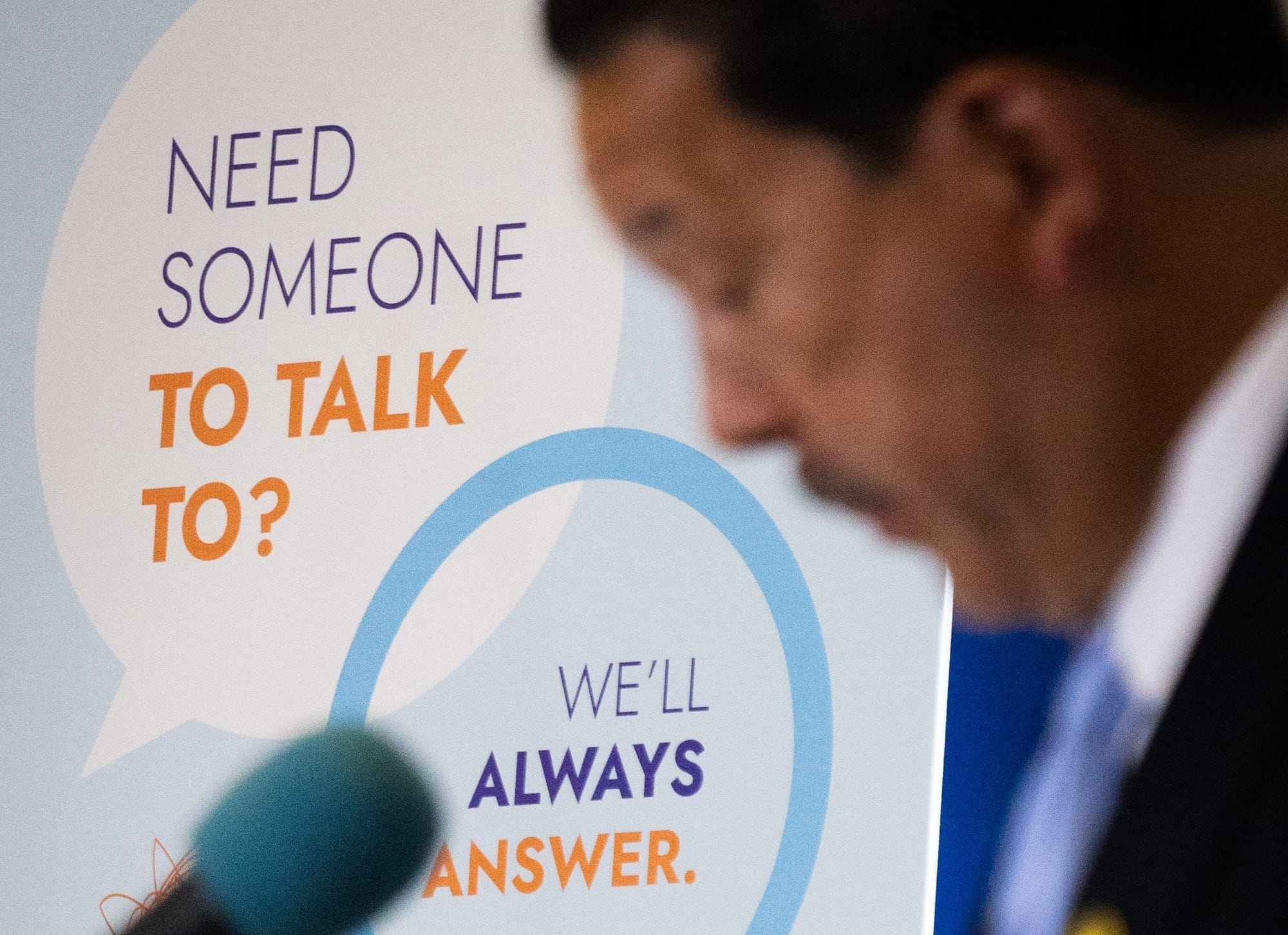
In August 2024, then-Mayor Bruce Harrell announced $12.25 million for student safety and mental health services. The city earmarked $5.6 million to increase staffing at school-based mental health centers, and $2.4 million for teletherapy services, most of which went toward the Talkspace partnership. The city later allocated an additional $5.7 million to local providers specializing in culturally specific mental health care.
It added up to less than the $20 million demanded by students. Three students interviewed for this story said they had never heard they could get Talkspace for free, and several said they would have preferred school-based, in-person care.
Seattle signed its deal with Talkspace in 2024 without seeking bids from competitors, city records show. The city used a process that is common for local governments, piggybacking on a competitively solicited contract to rapidly deploy services. The $104,500 monthly cost was based on a projection that at least 4% of Seattle’s 55,000 teens and young adults would register for the service over the 21-month contract period.
It is the only mental health contract in the initiative paid out on a flat fee instead of for actual services provided, city records show.
City emails show officials soon realized they were overpaying for a service that few youth were using. Behind the scenes, city leaders over several months weighed their options, including amending or terminating the deal, according to emails reviewed by Proof News and The Seattle Times, but were concerned about the loss of universal access to therapy and an abrupt end to a “high-profile partnership.”
Conversations among staff show frustrations, internal correspondence reveals. One staffer, referring to the fact that Talkspace initially shared the number of youth who registered rather than the much smaller number of those actually getting therapy, called the company’s data reporting “deceptive.” She later joked to a colleague over Teams chats that Talkspace was “a liar.” The staffer also said she was motivated to re-bid the contract because the “current state with Talkspace is not okay.”
Rousselle, the Seattle spokesperson, said that during the first contract period, the education department and Talkspace “worked together to improve the quality and accuracy of utilization data.” Morales, the Talkspace spokesperson, declined to comment on Seattle employees’ opinions and private messages.
To boost youth engagement, the company marketed its therapy services at schools, colleges and community events, city records show.
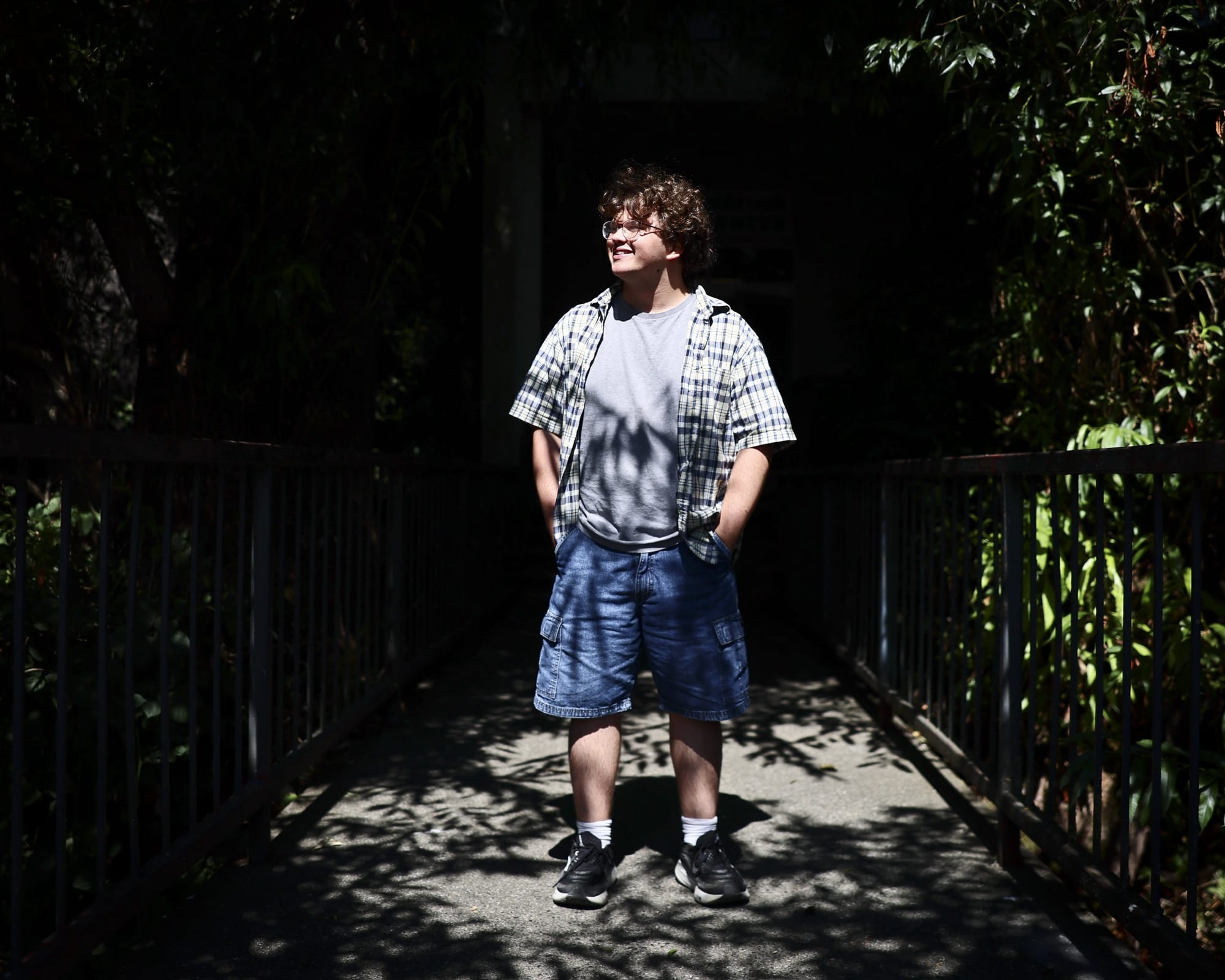
Talkspace posters hang on classroom walls, said Leo Falit-Baiamonte, a 17-year-old senior at Nathan Hale High School and current president of the Seattle Student Union. Some teachers have set aside class time to promote it, he said.
Still, Falit-Baiamonte said he didn’t know of anybody who used it.
“If you’re meeting students where they’re at,” he said, “meet students inside schools, where they are the majority of the day.”
This spring, the city sought new bids for a “universal access” teletherapy provider. Talkspace was the only applicant.
Despite the company’s tepid track record, the city this summer doubled down on its partnership with Talkspace, agreeing to pay up to $830,000 for one additional year.
But this time around, the deal contains more detailed reporting requirements and is tied to performance, including a goal to provide therapy to 1,000 youth. It also expands young people’s access to real-time visits, bumping up the cap for live virtual meetings from one per month to two.
This reporting was made possible with the financial support of the Ballmer Group and The Fund for Investigative Journalism.